
Vintage and supporter shirts read as streetwear when the cut does the work: a loose hockey or full-button baseball shirt layers like an overshirt, while a slim modern kit still looks like a uniform.
- Start loose. An NHL cut is 1–2 sizes roomier than a soccer shirt at the same label — you get the oversized drape without sizing up.
- One logo only. The shirt is already the loudest piece you own; keep the rest plain and let a single accent colour tie it together.
- Check numbers, not badges. At the same size label, chest and body length differ by up to 5 in / 12 cm between leagues.
Free worldwide shipping over $57 · 30-day returns, first size swap free.
Walk through any city centre on a Saturday and count the crests. Not on people heading to a stadium — on people queuing for coffee, riding the subway, sitting in a lecture hall. The shirt on their back is usually not this season's kit. It is a 1996 away shirt, a 1980s basketball throwback, a pinstriped button-front that has been out of production for years. Supporter shirts became streetwear the moment buyers stopped treating them as matchday uniform and started treating them as a layering piece — you can see it in how jersey stores, ours included, now sort their stock. This guide is about wearing them well: which cut drapes, what goes underneath, and which shirt suits the way you already dress.
Why is vintage jersey streetwear suddenly everywhere?
The shift started with the silhouette, not the badge. A 1990s football shirt or an 1980s basketball throwback is cut wide, long and low through the armhole — closer to a short-sleeve overshirt than to a fitted modern replica. That is a shape the fashion world already knew what to do with: it drapes, it moves, and it hides a hoodie underneath without a fight.
Three practical things keep it working. Length. In our own stock, body length at a men's size small runs from 28 in / 71 cm on baseball and soccer cuts to 30 in / 76 cm on hockey cuts. A 30 in body worn untucked covers the waistband, which is exactly what turns a shirt into outerwear. Surface. Archive-style releases lean on large embroidery, bold colour blocks and a denser knit that holds its shape after a wash — they photograph like graphic design, which is why they survive the jump from stadium to sidewalk. Cost per wear. A fan version or replica shirt is priced as clothing rather than as a collectible, so you wear it to a gig or a lecture, not only to a game.
The failure mode is equally predictable, and it is not about money. It is wearing a competing set: matching shorts, matching socks and a scarf. The shirt carries one very large logo already, so the rest of the outfit has to stay quiet. Everything below is built around that rule.
Which cut actually reads as streetwear?
The one that already fits the way you dress off the field. Button-front baseball and loose hockey cuts drape; a slim soccer shirt wears close to the body and only works if that is the look you want. Here is every league we stock, measured at the same size label.
| League cut (men's S) | Chest (in / cm) | Body length (in / cm) | Sleeve (in) | How it wears off the field |
|---|---|---|---|---|
| MLB — full button-front | 36–38 / 91–97 | 28 / 71 | 17.5 | Wears like a short-sleeve overshirt; open over a tee it frames the crest instead of shouting it |
| NHL — very loose | 40–43 / 102–109 | 30 / 76 | 24 | Biggest drape in the shop: 1–2 sizes roomier than soccer at the same label, so order true |
| NFL — roomy / boxy | 35–38 / 89–97 | 29 / 74 | 17.5 | Boxy and long; the easiest cut to layer over a hoodie on a cold gameday |
| NBA — standard / long | 37–39 / 94–99 | 28.5 / 72 | — | Sleeveless and longer through the hem: always needs a plain layer underneath off the court |
| Soccer — athletic / slim | 35–37 / 89–94 | 28 / 71 | — | Sits close to the body; size up one if you want the relaxed streetwear look |
Chest figures are body measurements from our size guide, not garment measurements — measure your own chest and match the row before ordering. Every shirt above is a fan version / replica cut.
Two lines from our size charter are worth remembering before you add anything to the cart. First: “A 40 in chest wears an NHL size S the way it wears a soccer size L.” Hockey is already generous, so a hockey throwback is the one league where you should not size up for the oversized look. Second, everywhere else, between two sizes you take the larger one.


Archive cuts side by side: Retro football printing from the 1990s against Throwback basketball from the 2010s. Two eras, same styling rule — one logo, plain everything else.
How to build the look around one shirt
Styling a jersey is subtraction. Pick the shirt first, then remove anything that repeats its colours or competes for attention. Three moves do most of the work: layer, don't match (open button-fronts and hoodies under boxy cuts), keep the bottom half plain (straight-leg denim, sweatpants, chinos — no team shorts), and choose one accent colour that appears twice and nowhere else.
Both palettes work with any crest: the colour count stays at three, so the shirt is never fighting the outfit it is part of.
Who should buy which shirt?
Four shopper profiles, four different right answers. The advice that suits one of them is exactly wrong for the next, so start from how often you will actually wear the thing.
1. You want it to pass as normal clothing. Take the full-button baseball cut — a New York Yankees button-front in navy is the safest version of the idea, because the placket reads as a shirt rather than a uniform. Order your true chest size: at size S the chest runs 36–38 in / 91–97 cm.
2. You want oversized without guessing. Buy a hockey throwback in your real size. At size S the chest is already 40–43 in / 102–109 cm and the body is 30 in / 76 cm long, which is where the streetwear drape comes from. Sizing up here is the single most common mistake we see on exchanges.
3. You are collecting the era, not the season. Go archive: 1990s football printing in Retro, or 1980s and 90s basketball in Throwback. These are the shirts that carry the largest embroidery and the boldest colour blocks, and they are the ones people ask about.
4. You are buying for a smaller frame, or as a gift. Youth XL covers a 34–36 in / 86–91 cm chest and fits up to about 5 ft 6 in / 168 cm; women's cuts are tapered, so if you want the classic boxy look order a men's size instead. If the size is a guess, the risk is low: 30-day returns with no restocking fee and a free first size swap. Want the name on the back? Custom nameplates take up to 12 characters (A–Z, 0–9, spaces and hyphens), are made in 5–7 business days plus 1–3 days of packing, and are final sale unless they arrive damaged or printed wrong. You can build one on our custom jersey page, or take a stock retro shirt and keep the number it already has.
 Pittsburgh PenguinsMario Lemieux Pittsburgh Penguins 1996-97 Power Play JerseyFan edition · NHL · MenView this shirt
 Los Angeles DodgersLos Angeles Dodgers Stitches Team Color Full-Button Fashion JerseyFan edition · MLB · MenView this shirt
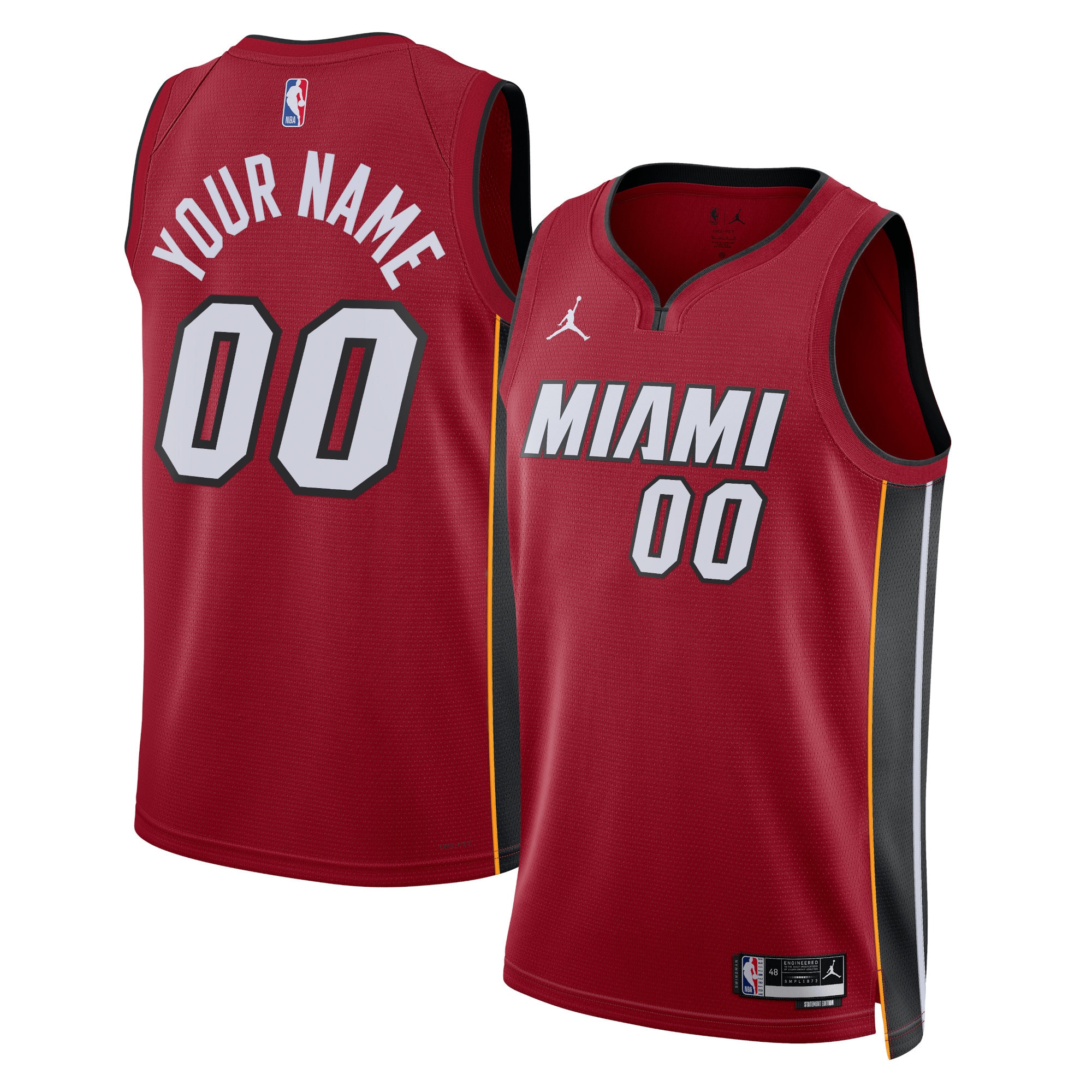 Miami HeatMiami Heat Unisex 2022/23 Swingman Custom Jersey - Statement EditionFan edition · NBA · MenView this shirt
Orders leave our warehouse in 1–3 business days and arrive in 7–15 business days with tracking, free worldwide over $57. Below that, shipping starts at $5 and never exceeds $50 on a single order — so a two-shirt order is usually the cheaper way to shop.
FAQ
Can you wear a vintage jersey as everyday streetwear?
Yes — if you choose the cut for it. Button-front baseball cuts at 36–38 in / 91–97 cm chest (size S) and loose hockey cuts at 40–43 in / 102–109 cm drape like an overshirt over jeans or sweatpants. A slim soccer shirt still reads as a playing kit unless you build the rest of the outfit around it: plain bottoms, one accent colour, nothing matching.
What should you wear under a sports jersey?
A plain white or black crew-neck tee under sleeveless basketball cuts, and a hoodie under boxy NFL or NHL shirts — the hockey cut has a 30 in / 76 cm body at size S, which is why it layers so easily. Skip printed tees underneath: two graphics in one outfit split the eye and cheapen both.
Do retro jerseys fit differently from current season shirts?
The era changes the print, not the size chart. Every fan version and replica shirt follows the same league silhouette: soccer is the slimmest, NBA standard, NFL and MLB relaxed, and NHL the loosest at 40–43 in / 102–109 cm chest at size S. Size by league, not by year — a 1996 retro football shirt is still slim, and a hockey throwback is still the roomiest thing in your wardrobe.
Can I put my own name on a retro-style jersey?
Yes. Custom nameplates take up to 12 characters (A–Z, 0–9, spaces and hyphens), are produced in 5–7 business days plus 1–3 days packing, and are final sale — they can only be returned if they arrive damaged or printed incorrectly. Not sure about the size yet? Order a stock shirt first: standard orders carry a 30-day return window with no restocking fee, and the first size swap is free.
Build the look from the archive
Retro prints and throwbacks across football, baseball, basketball and hockey. Free worldwide shipping over $57 · 30-day returns · first size swap free.
SHOP THE RETRO & THROWBACK EDIT